Back to Blog
CRM & DialerSaturday, August 29, 2026by Telvora Team1 min read
BPO Operations CRM: Why Generic CRMs Fall Short for Service Teams
See why BPO and service teams need a CRM connected to dialer notes, tickets, tasks, follow-ups, monitoring, and operational reporting.
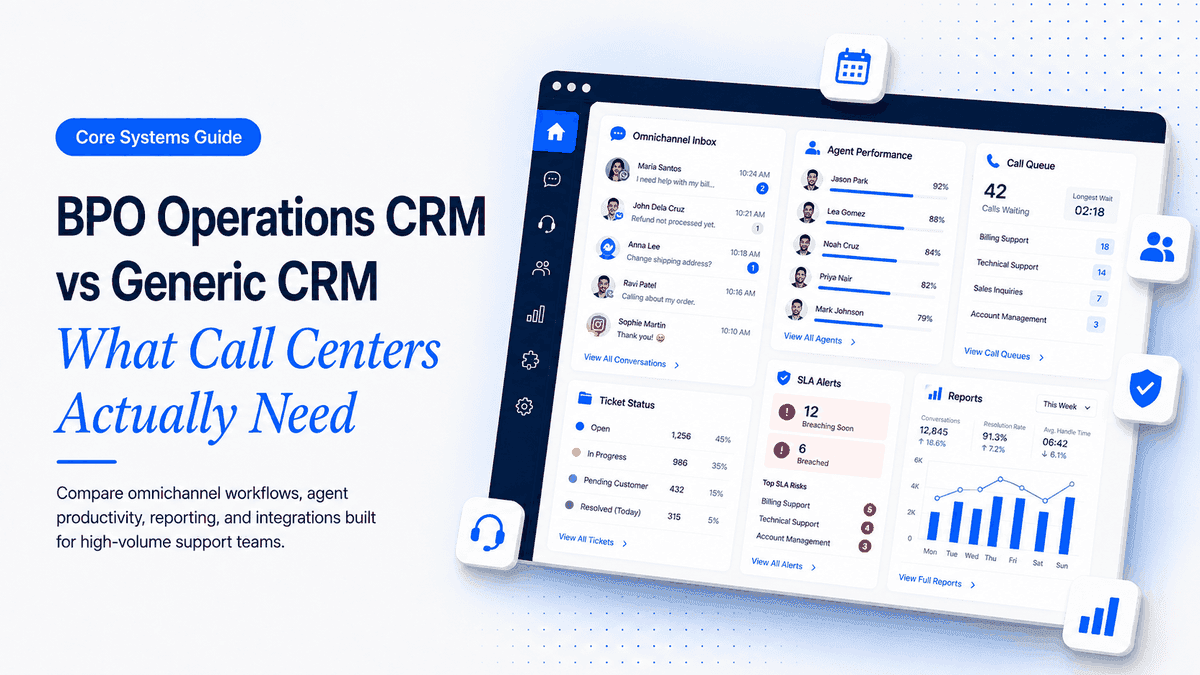
A BPO operations CRM keeps leads, customers, tickets, tasks, follow-ups, and account history in one workspace so service teams can act with context. Generic CRMs can store records, but they often miss the operational links between calls, agents, tickets, and manager review.
Where generic CRMs break for BPO teams
| Area | Generic CRM | BPO operations CRM |
|---|---|---|
| Call context | Often separate | Connected to dialer notes and outcomes |
| Follow-ups | Sales pipeline focused | Agent task queues and manager review |
| Tickets | May need another tool | Part of service history |
How Telvora helps
Telvora CRM is designed for BPO and service teams that need customer records, tickets, tasks, notes, follow-ups, account history, and manager review views in one connected system.
Frequently Asked Questions
What is a BPO operations CRM?
A BPO operations CRM is a CRM designed for service teams that need customer records, tickets, tasks, follow-ups, call context, and manager visibility in one system.
Why not use a normal CRM for a BPO?
A normal CRM may work early, but BPO teams often need tighter links between CRM records, call outcomes, tickets, agent tasks, and service reporting.
Does Telvora CRM connect with dialer workflows?
Telvora positions CRM and dialer workflows as connected modules so call notes, outcomes, and follow-ups can stay close to customer records.