Back to Blog
BPO OperationsThursday, August 27, 2026by Telvora Team1 min read
BPO Operations Platform: What It Is and What Systems It Should Include
Learn what a BPO operations platform should include, from CRM and dialer workflows to monitoring, attendance, HRMS, chat, VPN, and reporting.
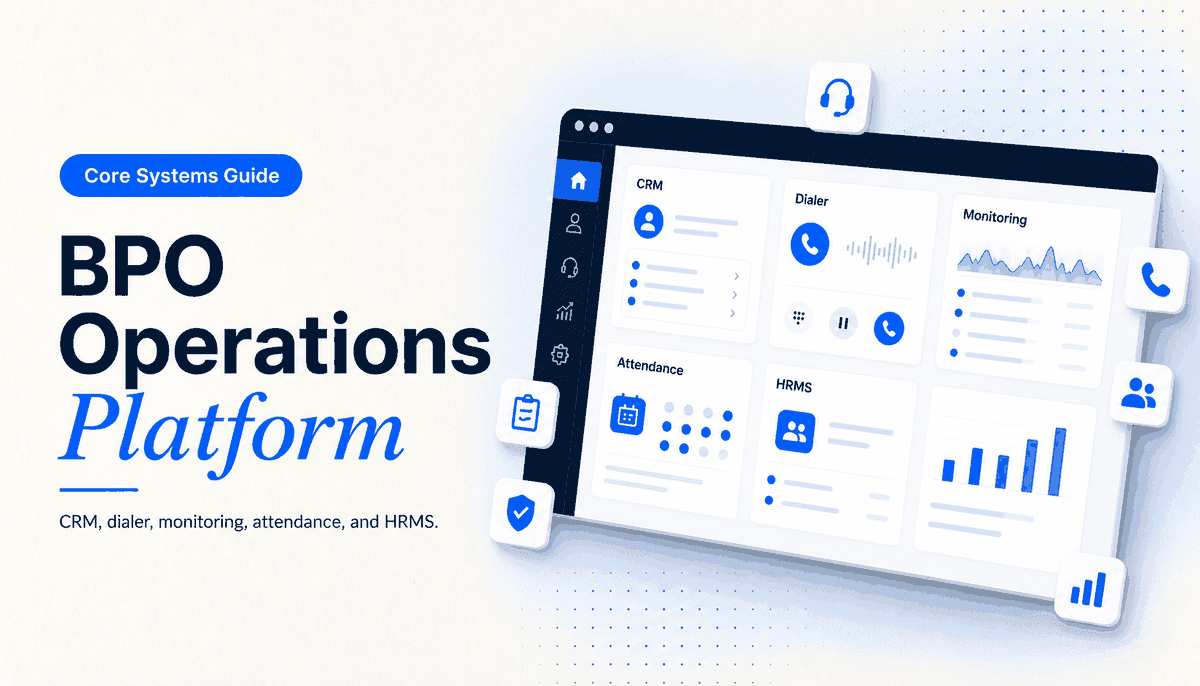
A BPO operations platform connects the daily systems a service team uses to manage customers, calls, agents, attendance, HR records, and reporting. Instead of running CRM, dialer, monitoring, and workforce workflows in separate tools, teams get one operating layer for cleaner visibility.
Core systems every BPO team needs
| System | Why it matters |
|---|---|
| CRM | Stores leads, customers, tickets, tasks, notes, and follow-ups. |
| Dialer | Manages inbound and outbound calling, dispositions, routing, and call notes. |
| Monitoring | Shows queues, agent state, SLA pressure, escalations, and service movement. |
| Attendance | Tracks shifts, late arrivals, absences, approvals, and attendance exceptions. |
| HRMS | Manages employee profiles, onboarding, documents, leaves, roles, and HR cases. |
How Telvora helps
Telvora brings CRM, dialer workflows, monitoring, attendance management, HR management, chat, VPN, data refinement, reporting, and upcoming native VoIP into a connected BPO operations platform.
Frequently Asked Questions
What software does a BPO need?
A BPO usually needs CRM, dialer workflows, monitoring, attendance management, HRMS, reporting, and secure access controls.
Is a BPO operations platform different from a CRM?
Yes. A CRM manages customer records, while a BPO operations platform connects CRM data with calling, monitoring, attendance, HR, and reporting workflows.
Can a small BPO start with only a few modules?
Yes. A small team can start with the highest-friction modules, such as CRM, dialer, attendance, or HRMS, then expand later.